Long-term culture-expanded alveolar macrophages restore their full epigenetic identity after transfer in vivo
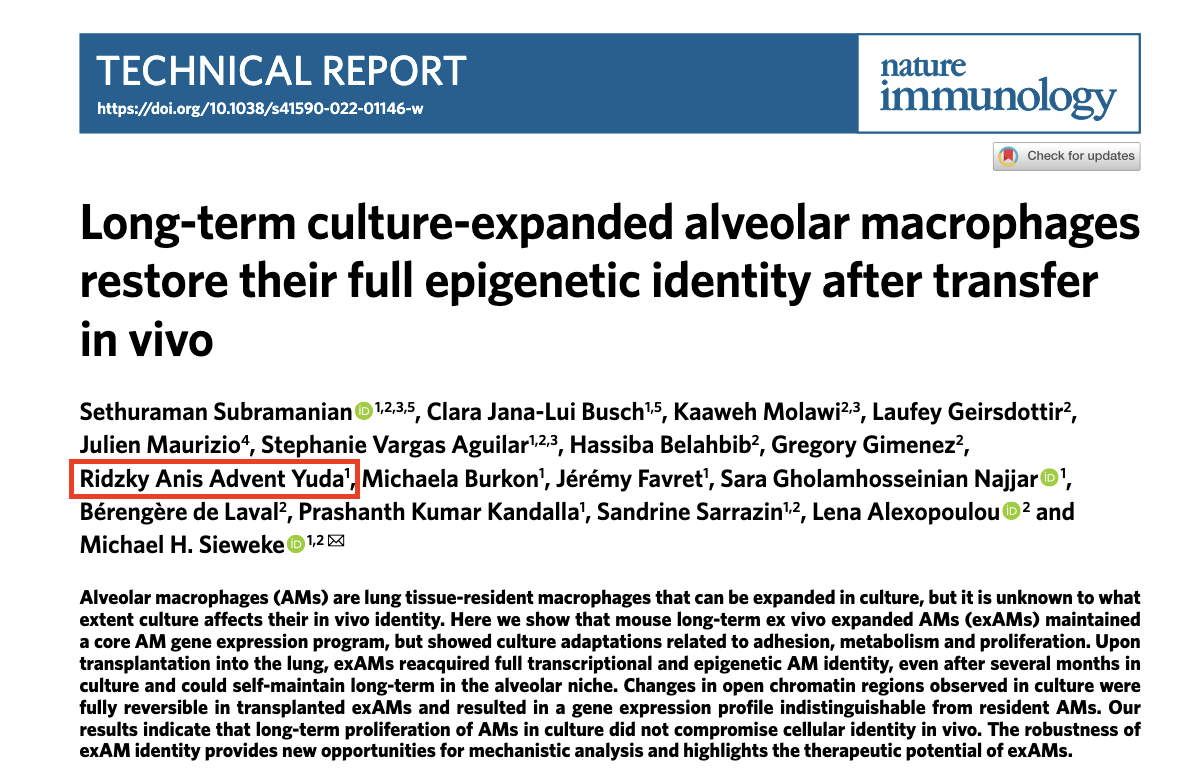
Click to view the full article on the journal website.
Published in Nature Immunology, 2022
Alveolar macrophages are the primary tissue-resident macrophages of the lung. These cells are thought to self-renew due to their low expression of MAFB and c-MAF. However, it remained unclear whether alveolar macrophages could be maintained in long-term culture and how the culture environment or the lung microenvironment might influence their identity. In this work, I contributed to a study from the Sieweke lab demonstrating that alveolar macrophages can be cultured indefinitely in the presence of granulocyte-macrophage colony-stimulating factor (GM-CSF), maintaining proliferation for over 10 months without signs of proliferative crises. Remarkably, these cells continued to gain proliferative capacity without evidence of immortalization and could be retransplanted into the native lung environment. The study also highlights the epigenomic plasticity of these cells driven by the culture environment, even as their core identity is maintained. This work provides a fundamental proof-of-concept for the potential use of macrophage-based culture systems in cellular therapy.
Recommended citation: Subramanian, S., Busch, C.JL., Molawi, K. et al. "Long-term culture-expanded alveolar macrophages restore their full epigenetic identity after transfer in vivo." Nat Immunol 23. 458-468(2022).
Download Paper