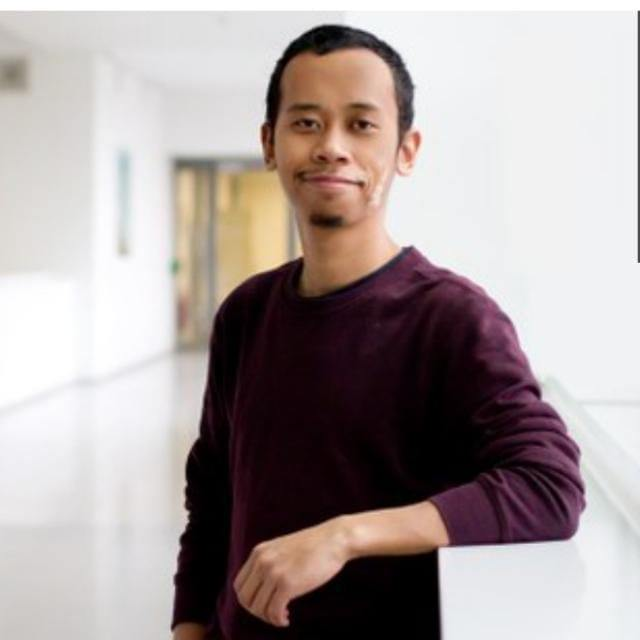
Ridzky Yuda
Welcome / Willkomen / Selamat Datang
Thank you for visiting my GitHub AcademicPages site. I created this platform to share my research Portfolio, technical expertise, and ongoing projects highlighted in my CV, and to foster collaborations across academia and industry. When time permits, I write short Blogpost that translate advances in stem cell biology and immunology into accessible language.
About Me / Über mich / Tentang Saya
Trained as a stem cell and immunobiologist, I have conducted biomedical research across premier institutions in Europe and the United States, gaining broad expertise in both fundamental and translational science. My research aims to define the molecular mechanisms that regulate stem cell fate decisions and to determine how their disruption contributes to aging-associated dysfunction and hematologic disease. I am particularly interested in how inflammatory stress reshapes hematopoietic stem cell (HSC) commitment and tissue-resident macrophage self-renewal.
My work integrates in vivo disease modeling with single-cell multi-omics approaches, including scRNA-seq and scATAC-seq, to resolve transcriptional and epigenetic regulatory programs at cellular resolution. I design and execute murine models such as chronic alcohol exposure, LPS-induced inflammation, and bone marrow reconstitution, and I independently develop computational pipelines to analyze and interpret high-dimensional datasets.
During my Ph.D. training in the laboratory of Prof. Michael Sieweke at Technische Universität Dresden, Germany, I contributed to a collaborative study across French and German institutions (Centre d’Immunologie de Marseille-Luminy, Center for Regenerative Therapies Dresden, and the Max Delbrück Center for Molecular Medicine in Berlin) demonstrating that alveolar macrophages—a lung-resident macrophage population—can undergo extensive self-renewal in vitro while maintaining their core cellular identity. We further established methods to genetically engineer these cells using lentiviral vectors, expanding their utility for mechanistic and translational studies.
In my current postdoctoral project, I investigate how chronic inflammatory stress alters HSC lineage commitment. Using integrative single-cell transcriptomic and epigenomic profiling, I examine how inflammatory and aging-associated gene expression programs are activated and how epigenetic regulation is remodeled under sustained stress conditions.
Overall, my expertise lies at the intersection of experimental hematology, immunology, and integrative genomics. I combine rigorous in vivo experimentation with independent bioinformatic analysis to generate mechanistic insight from complex biological systems.
 —
—